Which Tires Are Best for SUVs and 4x4s in Qatar?
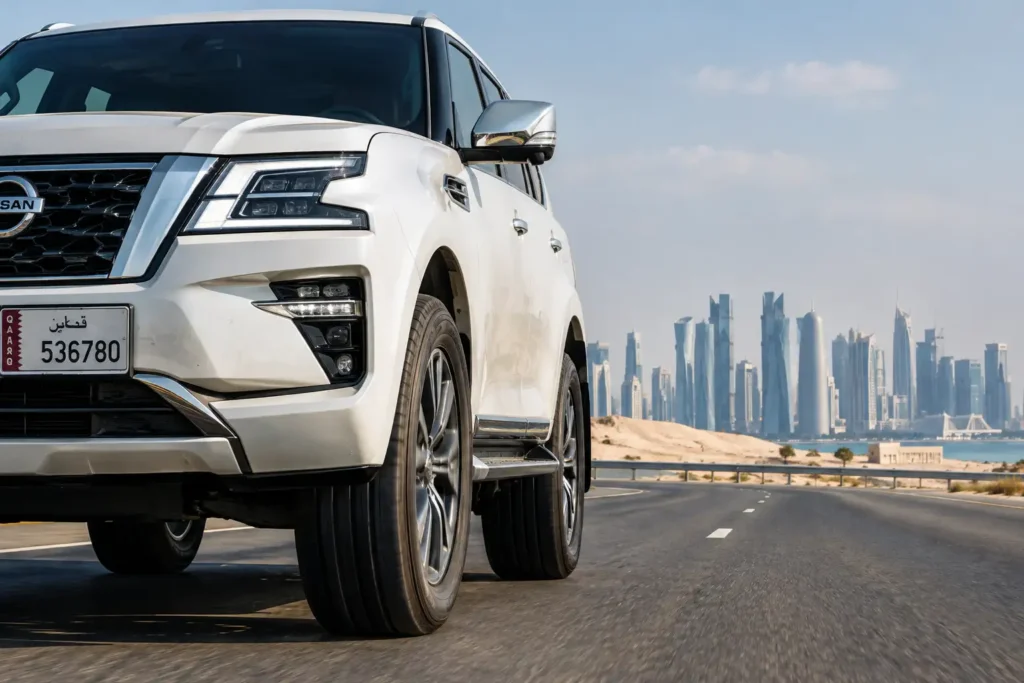
Qatar’s extreme summer heat, long highway drives, busy city roads, and occasional desert trips put real demands on your tires, affecting durability, traction, braking, and comfort. The best choice depends on where you drive most: highway-terrain (H/T) tires suit daily road use, all-terrain (A/T) tires balance road and off-road performance, and mud-terrain (M/T) tires are built for tougher off-road conditions.
This guide explains the main tire types, how Qatar’s climate affects performance, and what to check before buying, including load index, speed rating, heat resistance, and wet-road traction. A reputable dealer can help you confirm product authenticity, choose the correct size, and arrange professional fitting.
How Do Qatar’s Driving Conditions Affect SUV and 4×4 Tires?
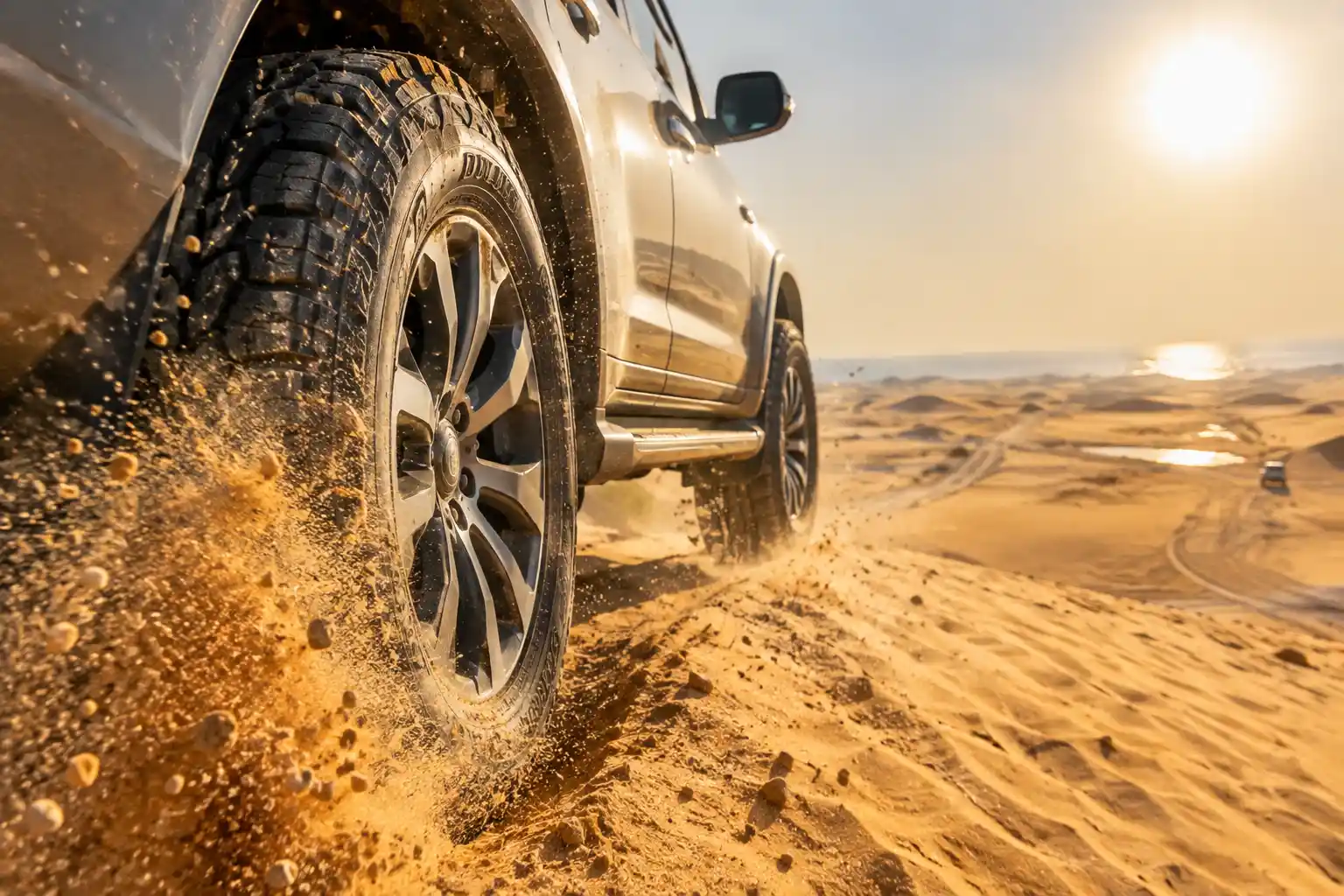
SUV and 4×4 tires must withstand different road surfaces and weather conditions. Understanding these factors helps drivers choose tires that suit their vehicles and everyday driving requirements.
1. Extreme Summer Heat
Summer temperatures in Qatar can exceed 45°C, and road surfaces may become even hotter under direct sunlight. Prolonged heat exposure accelerates rubber aging and may contribute to cracking, tread deterioration, and tire failure, particularly when tires are underinflated or overloaded.
Choose tires that meet your vehicle’s specifications, maintain the recommended pressure, and inspect them regularly for visible damage or signs of aging.
2. Long Highway Journeys
Long-distance driving at sustained speeds generates heat inside tires. SUVs also carry considerable weight, especially when transporting passengers, luggage, or camping equipment.
Choosing tires that meet your SUV’s load and speed requirements supports balanced handling, dependable road control, and safer highway travel.
3. Sand, Dust, and Desert Terrain
Driving in desert areas such as Sealine and Khor Al Adaid exposes tires to loose sand, gravel, and uneven terrain. For off-road driving, tires with strong traction and reinforced sidewalls help improve grip and withstand rough ground.
Highway-terrain tires are primarily designed for road use, whereas suitable all-terrain tires can provide a more versatile option for drivers who regularly travel between cities and desert areas. Driving technique and tire pressure must also be appropriate for the terrain and the vehicle manufacturer’s guidance.
4. Sudden Rain and Wet Roads
Although Qatar receives relatively little rainfall, occasional showers can make roads slippery. Dust, oil residues, and standing water can further affect tire grip and braking performance.
When selecting SUV tires, review independent wet-braking test results and choose a model that provides suitable wet-road performance for your driving needs.
5. Sunlight and Rubber Aging
Prolonged exposure to direct sunlight can contribute to tire rubber deterioration, including when a vehicle remains parked outdoors for extended periods.
Whenever possible, park in shaded areas and inspect the tires for cracks, bulges, uneven wear, and other visible damage. Remember that adequate tread depth alone does not guarantee that an aging tire remains safe.
Which Tire Types Are Best for SUVs and 4x4s in Qatar?
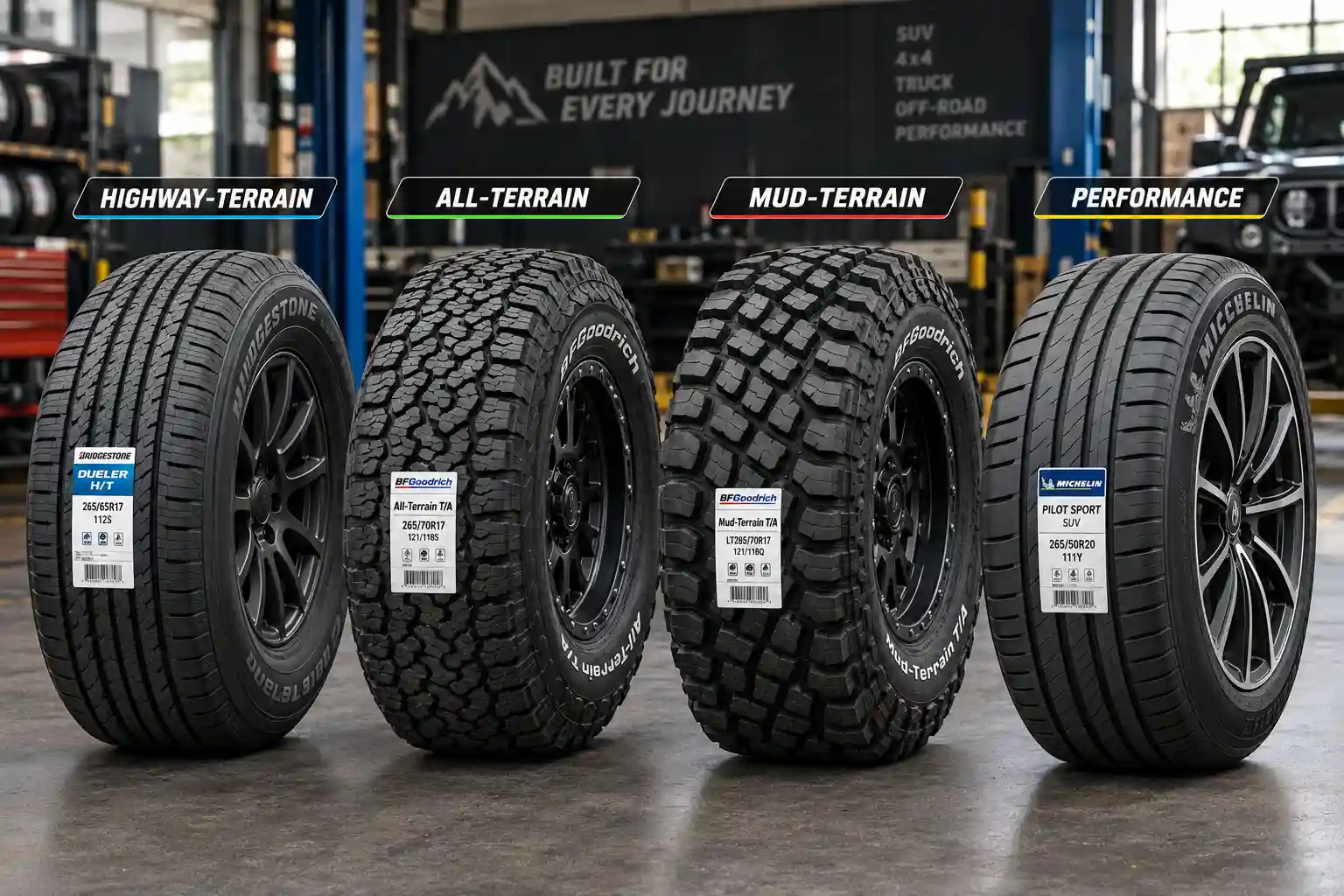
The most suitable tire type depends on whether you primarily drive in the city, travel on highways, or regularly explore desert terrain.
1. Highway-Terrain (H/T) Tires
Highway-terrain tires are built mainly for use on paved roads. They typically prioritize ride comfort, predictable handling, reduced road noise, and efficient rolling performance.
2. All-Terrain (A/T) Tires
All-terrain tires offer a practical combination of everyday road comfort and improved grip on rough surfaces. Their tread designs can provide versatility on gravel roads, dirt tracks, and selected desert routes, depending on the model and conditions.
3. Mud-Terrain (M/T) Tires
Mud-terrain tires feature aggressive tread blocks and wide grooves designed to improve traction in mud and challenging off-road conditions.
4. Performance SUV Tires
Performance SUV tires are designed for vehicles that prioritize responsive steering, road stability, and braking performance.
Popular SUV and 4×4 Tyre Brands in Qatar
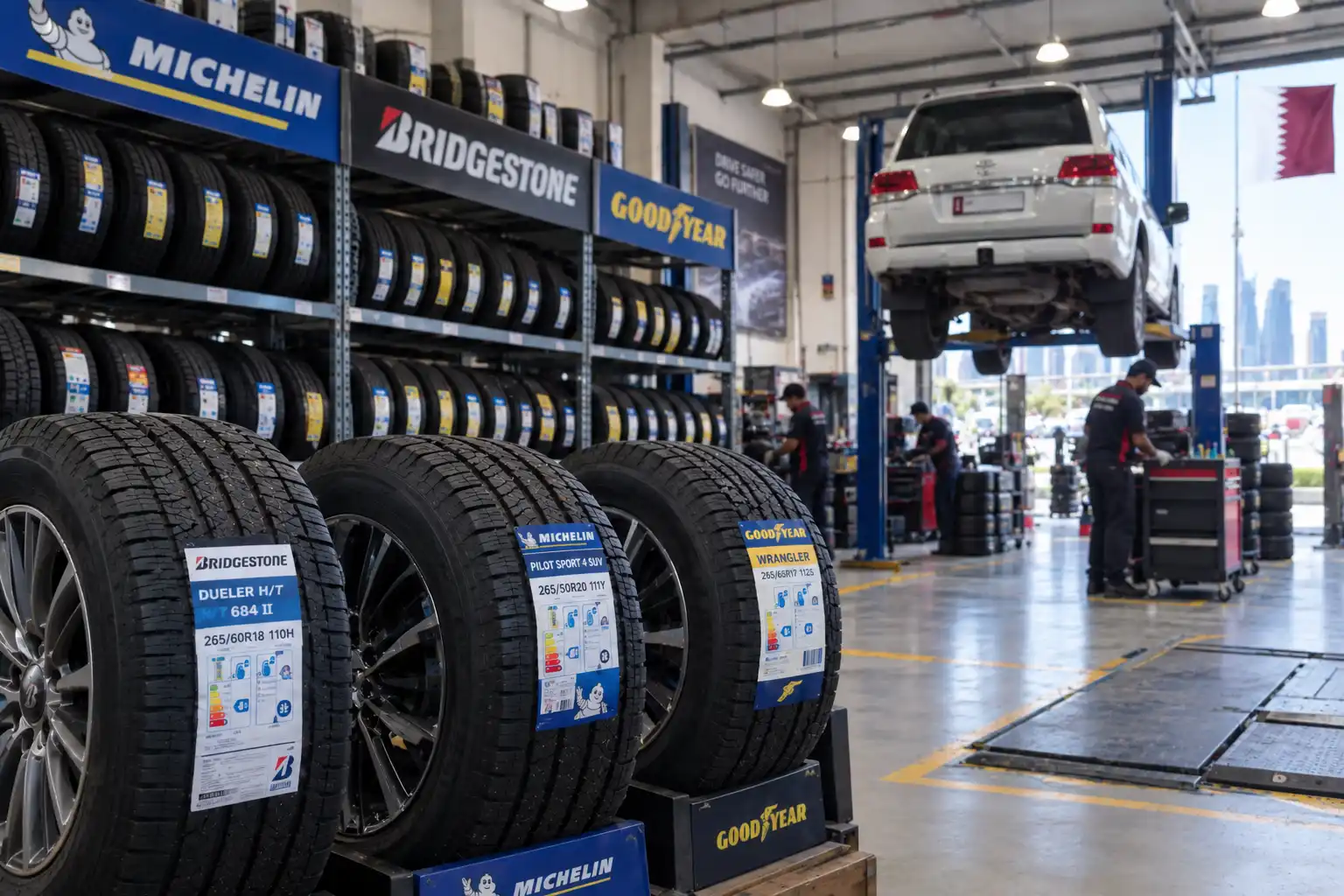
Several international tyre brands offer options for SUVs and 4×4 vehicles, depending on driving conditions and vehicle specifications.
- MichelinSuitable for road-focused SUVs and highway driving.
- BridgestoneOffers tyres for everyday driving and selected SUV applications.
- GoodyearProvides highway and all-terrain options.
- PirelliSuitable for premium and performance-focused SUVs.
- ContinentalOffers road-focused tyres for comfort and handling.
- YokohamaProvides options for SUVs and selected off-road applications.
- BFGoodrichWorth considering for all-terrain and off-road driving.
- Toyo TiresOffers options for road use and 4×4 applications.
Availability varies by dealer, tyre size, and model. Confirm current stock, product details, and vehicle compatibility before purchasing.
SUV and 4×4 Tyre Prices in Qatar
SUV and 4×4 tyre prices depend on brand, size, model, and tread type. Premium and specialised off-road tyres may cost more than standard highway tyres.
| Brand and model | Tyre size | Indicative price |
|---|---|---|
| Michelin Primacy SUV+ | 265/65 R17 | QAR 662 per tyre |
| Goodyear Wrangler Territory AT | 325/65 R18 | QAR 1,950 per tyre |
Treat these figures as indicative only and verify them against current retailer listings before publishing. Prices, availability, fitting, balancing, and warranty terms may vary by dealer.
Tip: Check your vehicle manufacturer’s recommended tyre size, load index, and speed rating before comparing prices. For four tyres, multiply the individual tyre price by four and account for any additional charges.
How Do You Choose the Right Tires for Your SUV or 4×4?
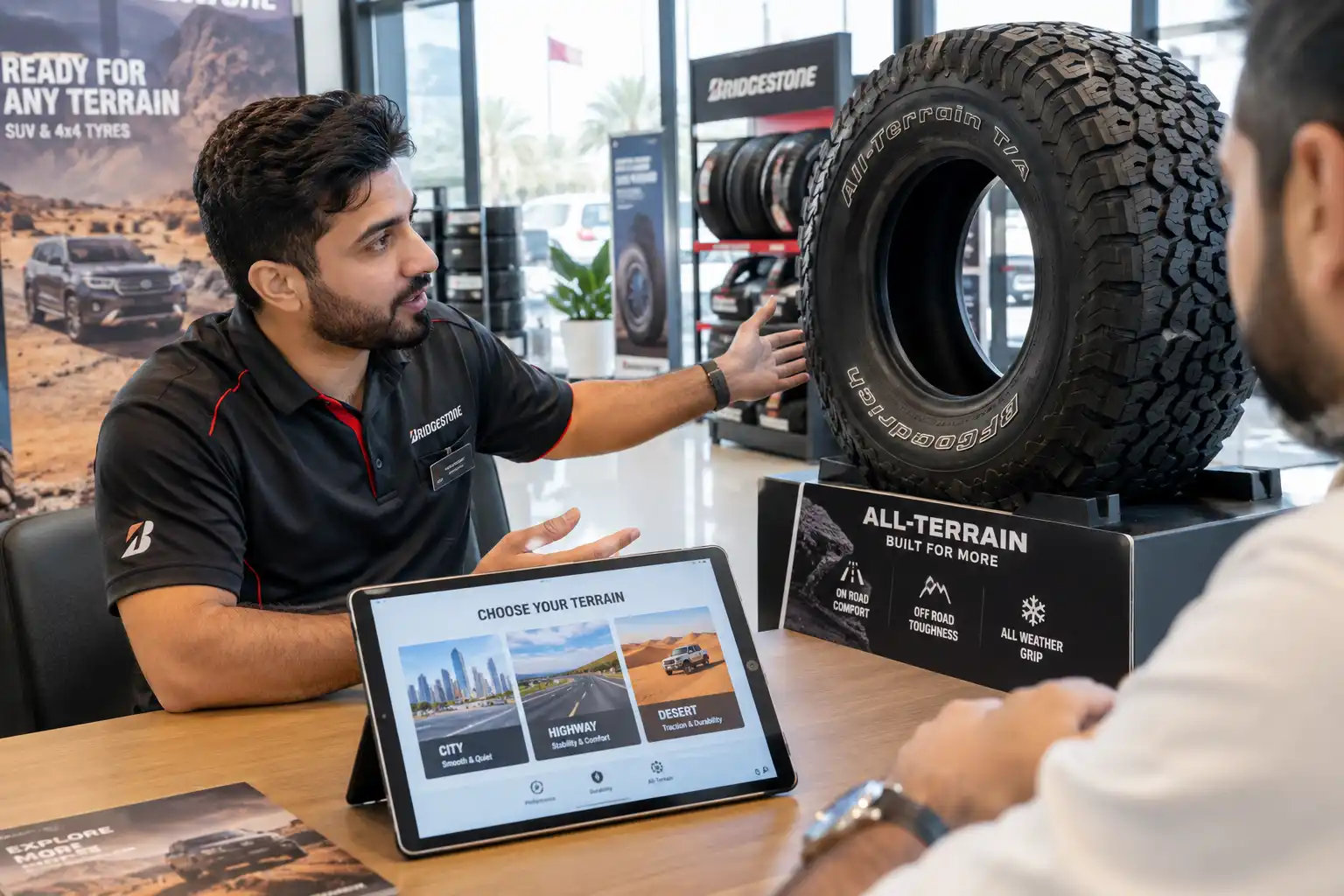
Use your typical driving conditions to narrow down the options.
| Driving Requirements | Tire Type to Consider | Main Priority |
|---|---|---|
| City driving and daily commuting | Highway-terrain (H/T) | Comfort and everyday handling |
| Regular highway journeys | Highway-terrain (H/T) or suitable road-focused tires | Stability and braking |
| City driving combined with desert trips | All-terrain (A/T) | Versatility across surfaces |
| Frequent demanding off-road driving | Suitable off-road or mud-terrain tires | Terrain-specific traction |
| Premium or performance SUV driving | Performance SUV tires | Responsive road handling |
Always check the vehicle manufacturer’s specifications and the particular tire model’s performance characteristics before purchasing.
What Should You Check Before Buying SUV Tires in Qatar?
Choosing the correct tire involves more than selecting a brand or comparing prices. The following factors can help you evaluate whether a tire is suitable for your SUV or 4×4.
1. Heat Resistance and Tire Construction
Choose tires from reputable manufacturers with specifications appropriate for your vehicle and intended driving conditions. Tire construction, inflation pressure, vehicle load, driving speed, and maintenance all influence heat management.
Where applicable, review the UTQG temperature grade for passenger tires. However, this grade is not a standalone measure of suitability for Qatar’s climate and is not available for every tire category.
2. Load Index and Speed Rating
The load index indicates a tire’s rated load-carrying capacity under specified conditions, while the speed rating identifies its rated speed capability.
SUVs and 4x4s may carry heavy loads, so selecting the correct specifications is particularly important. Follow the vehicle manufacturer’s recommendations and do not fit tires with ratings below the permitted requirements for your vehicle and intended use.
3. Tire Size and Vehicle Compatibility
Check the tire size specified by the vehicle manufacturer before purchasing a replacement. The size is typically displayed on the tire sidewall and in the vehicle owner’s manual or tire information label.
Using the correct size helps maintain compatibility with the vehicle’s wheels, suspension, load requirements, and electronic systems. For four-wheel-drive vehicles, matching tire specifications and maintaining appropriate differences in tread depth are especially important because some drivetrains are sensitive to variations in tire circumference.
4. Tire Manufacturing Date
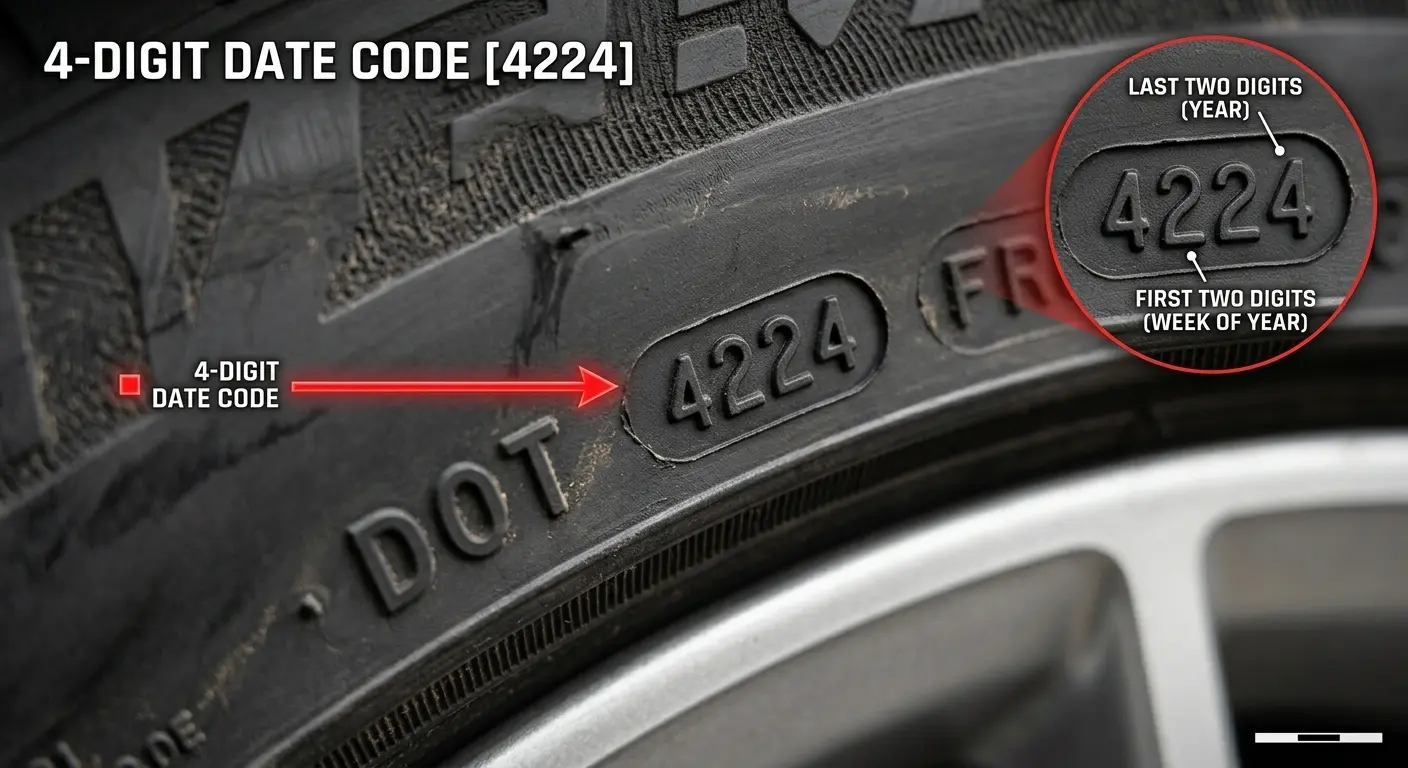
Check the four-digit date code at the end of the DOT identification on the sidewall. The first two digits represent the manufacturing week, and the last two digits indicate the year of manufacture.
For example, 2425 means the tire was manufactured during the 24th week of 2025.
Avoid tires with an unnecessarily long or uncertain storage history without checking their condition and storage circumstances. Follow the tire manufacturer’s recommendations for inspection and replacement because rubber can deteriorate with age even when tread depth remains adequate.
5. Sidewall Strength and Puncture Protection
Sidewall construction is an important consideration for SUVs and 4x4s that regularly travel on gravel, rocky tracks, or desert routes.
Select tires designed for your intended terrain and review the manufacturer’s information about sidewall construction and puncture resistance. A reinforced sidewall may be useful in certain applications, but it does not eliminate the risk of punctures, cuts, or blowouts.
6. Wet Grip and Braking Performance
Wet-road grip is important even in regions where rainfall is relatively limited. Tire tread design, rubber compound, road conditions, and vehicle speed can all influence braking performance.
Where available, compare independent wet-braking and handling tests for the specific tire models you are considering. Avoid choosing tires based solely on appearance, tread aggressiveness, or price.
7. Tire Brand, Authenticity, and Dealer Reliability
Compare tires based on performance, durability, warranty terms, suitability for your vehicle, and value for money. Brand reputation can be a useful starting point, but performance varies between individual tire models.
Purchase from a reputable tire dealer who can confirm product authenticity, manufacturing details, correct sizing, and applicable Qatar requirements. Professional installation and balancing also help support smooth and reliable driving.
How Can You Maintain SUV and 4×4 Tires in Qatar?
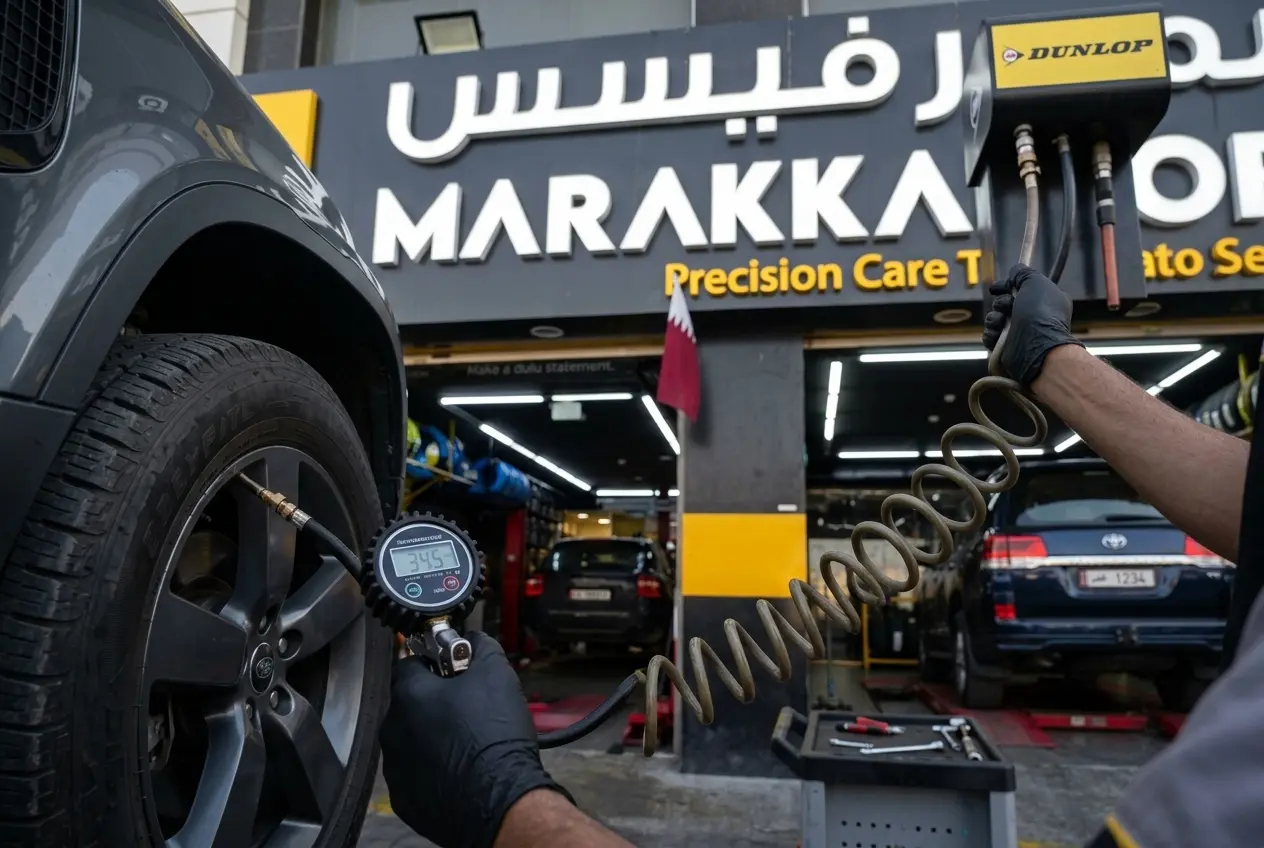
Regular maintenance helps reduce premature wear and supports safe driving in Qatar’s demanding conditions.
- Check tire pressure regularly: Follow the vehicle manufacturer’s recommended pressure, measured when the tires are cold. Do not use the maximum pressure printed on the sidewall as the normal operating target.
- Inspect tread depth and tire condition: Look for uneven wear, cracks, cuts, bulges, and embedded objects.
- Rotate tires as recommended: Follow the vehicle and tire manufacturer’s rotation schedule to help manage uneven wear.
- Check wheel alignment and balance: Have the wheels inspected if the vehicle pulls to one side, the steering wheel vibrates, or uneven wear appears.
- Avoid overloading: Keep the vehicle within its specified load limits, including when carrying camping equipment or luggage.
- Seek professional inspection: Do this if you notice structural damage or signs of deterioration.
These checks are particularly important for SUVs that experience frequent highway travel, high temperatures, or occasional off-road driving.
Conclusion
The right SUV or 4×4 tires for Qatar depend on your vehicle specifications and typical driving conditions. Everyday drivers are often well served by highway-terrain tires, while those who frequently head into the desert or onto rough ground should consider all-terrain or specialized off-road options. Check tire ratings, condition, and compatibility before purchasing, and maintain the correct pressure to support safety, durability, and driving comfort. Choosing the Best Tire Shop in Qatar also ensures expert advice and quality fitting.
Frequently Asked Questions
1. Which tires are best for SUVs in Qatar?
Highway-terrain tires suit SUVs used mainly for city and highway driving, while all-terrain tires suit drivers who regularly combine paved roads with desert tracks. The best option depends on your vehicle specifications, driving habits, and budget.
2. Are all-terrain tires suitable for desert driving in Qatar?
Many are, for selected desert conditions. Performance varies by model, so consider the terrain, your vehicle’s capability, and appropriate tire pressure before entering the desert.
3. How does Qatar’s summer heat affect SUV tires?
It can accelerate rubber aging and cause heat buildup when tires are underinflated or overloaded. Regular pressure checks, proper load management, and inspections help maintain safe performance.
4. How often should I check my SUV tire pressure?
At least monthly and before long journeys, when tires are cold. Use the tire pressure specified by your vehicle manufacturer rather than the maximum pressure shown on the tire sidewall.
5. How can I check a tire’s manufacturing date?
Use the four-digit code at the end of the DOT identification. The first two digits are the week and the last two are the year, so 2425 means week 24 of 2025.
6. Which tire brands are worth considering?
Michelin, Bridgestone, Goodyear, Pirelli, Continental, Yokohama, BFGoodrich, and Toyo all offer ranges for different SUV and 4×4 uses. Compare individual models before buying.