Car tinting in Qatar uses window film to cut out most of the sun’s ultraviolet (UV) light and a big portion of its infrared heat. The result is a cabin that fades, cracks, and overheats more slowly.
Anyone who has returned to a car parked in Doha in July knows the feeling: the steering wheel is too hot to hold, and the seats radiate heat. Humid summers, bright sunshine in every season, and fine dust all take a toll on the materials inside your vehicle.
Below, you will see how the sun harms a cabin, what each film type does, and how to choose an installer. The advice applies whether your daily route runs through Doha, Lusail, Al Wakrah, or Al Khor.
Why Qatar’s Sun Is So Hard on Your Car Interior
Strong sunlight, trapped heat, and dust wear down every material inside a car, and Qatar’s climate speeds that process up. A vehicle parked outside in Doha absorbs sunlight for hours, and its windows let the energy in while keeping the heat from escaping.
Heat, UV, and Glare Explained
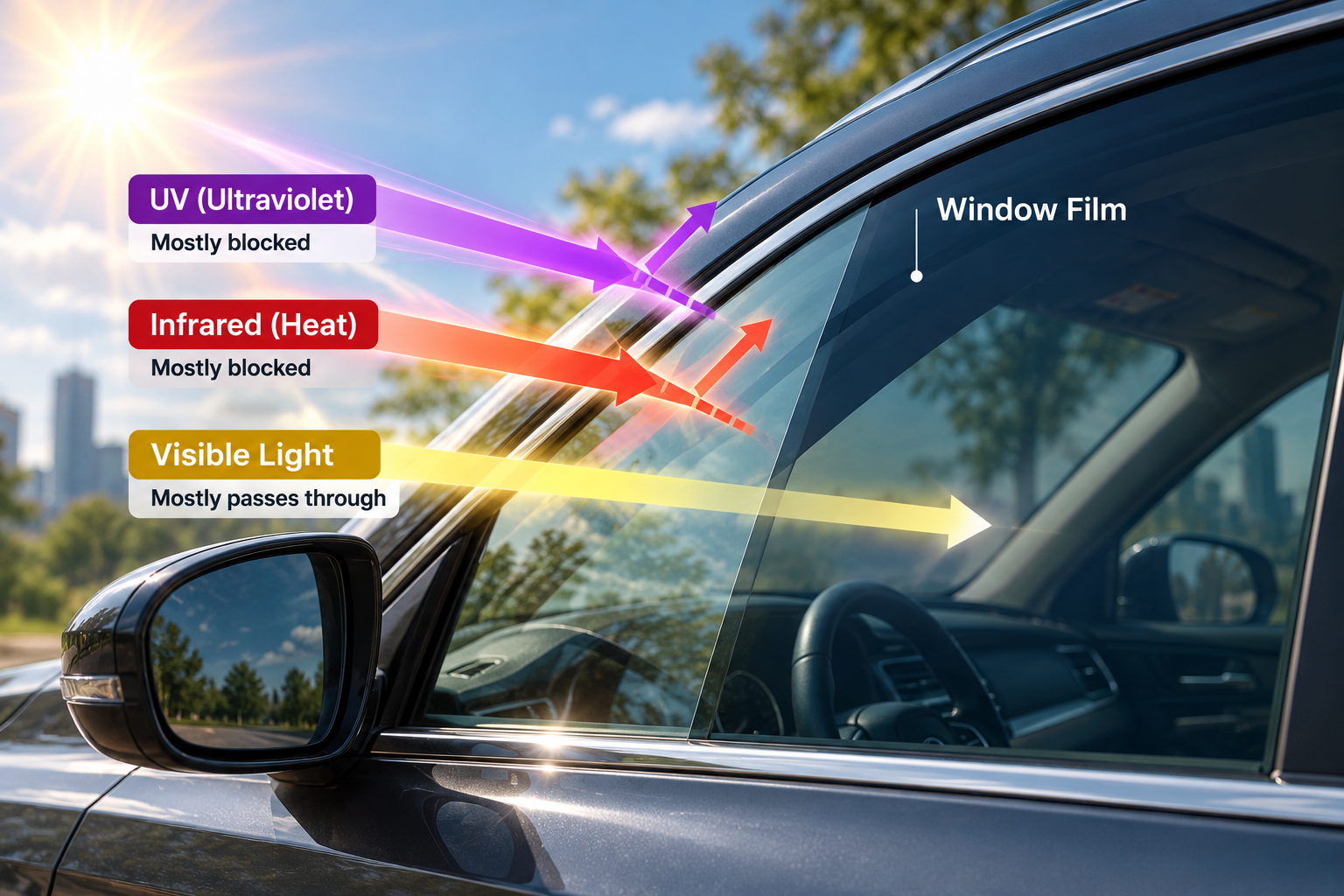
Ultraviolet (UV) radiation is the invisible part of sunlight that breaks down color pigments, plastics, and leather. It is the main reason interiors fade and crumble.
Infrared (IR) radiation is the invisible part of sunlight that you feel as warmth. It pushes cabin temperature up and forces your air conditioning to work overtime.
Visible light is everything your eyes can see. When it is too bright, it creates glare that strains your eyes and makes driving tiring.
What Sun Damage Looks Like Inside a Car
Cracked and Faded Dashboards
The dashboard sits closest to the windshield, so it absorbs the most punishment. First the black darkens to gray, then the surface dries out and hairline cracks spread from the seams. Fixing a cracked dashboard is expensive and rarely invisible, which makes protection the smarter route.
Discolored Leather and Fabric Seats
Daily exposure leaves leather stiff, pale in patches, and prone to splitting along the stitching. Fabric seats lose color where the sun lands most, often leaving a two-tone look. Hot seat surfaces also make short summer trips uncomfortable.
Warped Plastic Trim and Steering Wheel Wear
Door panels and console trim can chalk, warp, or lose their finish after seasons of heat. The steering wheel often turns glossy or tacky where your hands grip it. Together, these flaws make a car look older than it is and can drag down its resale value.
How Window Film Protects Your Car Interior
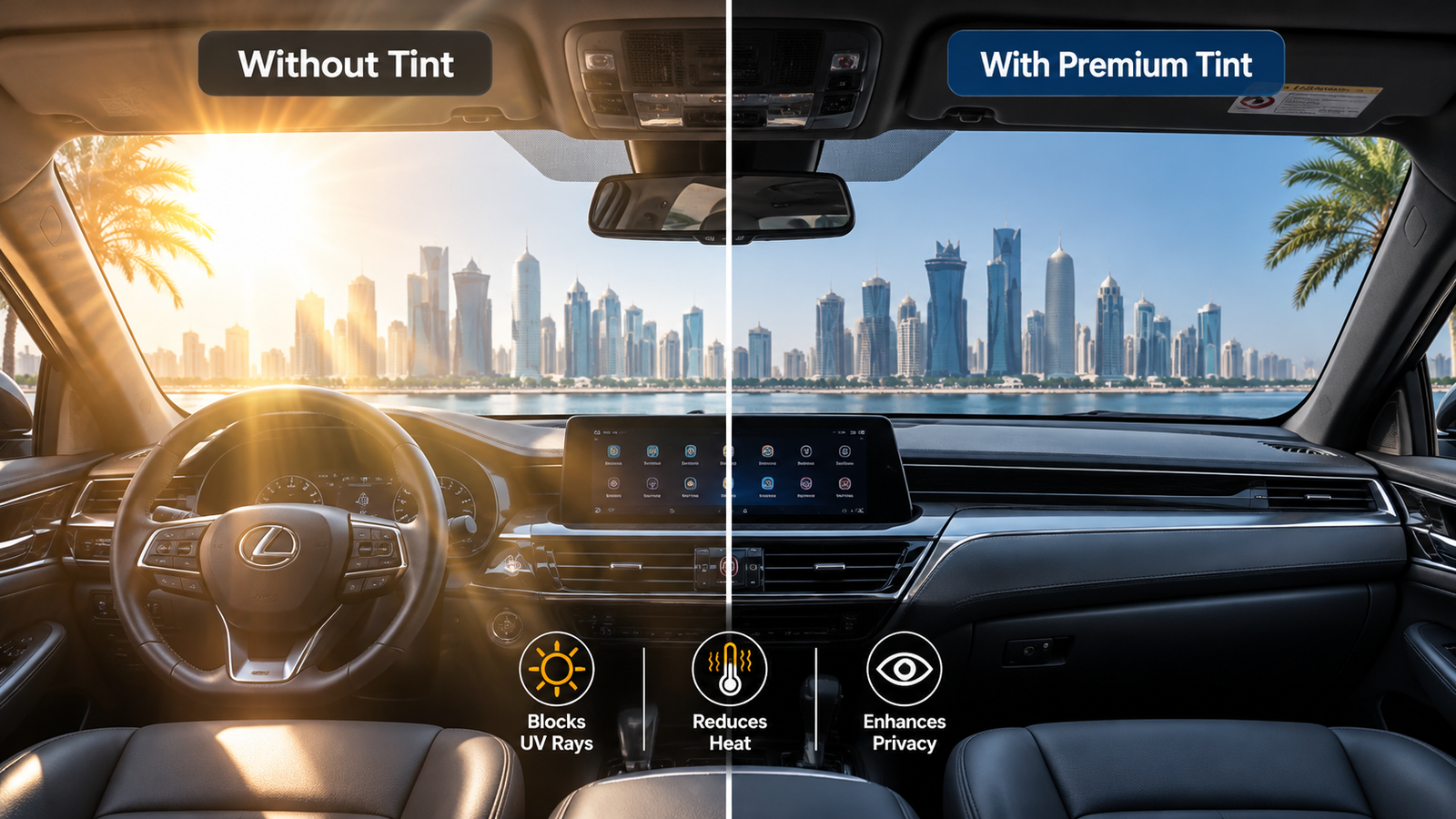
Window film protects your interior by filtering sunlight before it reaches your dashboard and seats: it blocks UV, turns away infrared heat, and softens glare. Each job slows a different type of wear, so the benefits stack together.
Blocking Ultraviolet Rays
A good window film is engineered to stop the large majority of UV light. Manufacturers often publish a figure of up to a very high percentage, and the exact number depends on the product, so request the data sheet for any film you are considering.
With less UV reaching your dashboard, seats, and trim, colors hold longer and surfaces crack later.
Rejecting Infrared Heat
Window film reduces how much heat passes through your glass. That keeps the cabin cooler, eases the workload on your air conditioning, and leaves the steering wheel and seats less scorching to touch. Ceramic film is the strongest option for this job.
Reducing Glare and Protecting Occupants
Window film tames the harsh glare of a low sun, so you squint less on morning and evening drives. Clearer sightlines also make it easier to read signs and spot traffic in bright conditions. Window film also lowers the UV that reaches you and your passengers through the glass, which adds up on long journeys.
Holding Glass Together
Window film also offers a secondary safety perk: if a window shatters, the film can help keep the pieces together. It does not replace safety glass, but it can reduce loose fragments.
Types of Car Tinting in Qatar: Which Film Is Best?
For Qatar’s heat, ceramic film is generally the best performer because it rejects the most heat without relying on a very dark shade. Dyed, carbon, and ceramic film differ mainly in heat rejection, lifespan, and price.
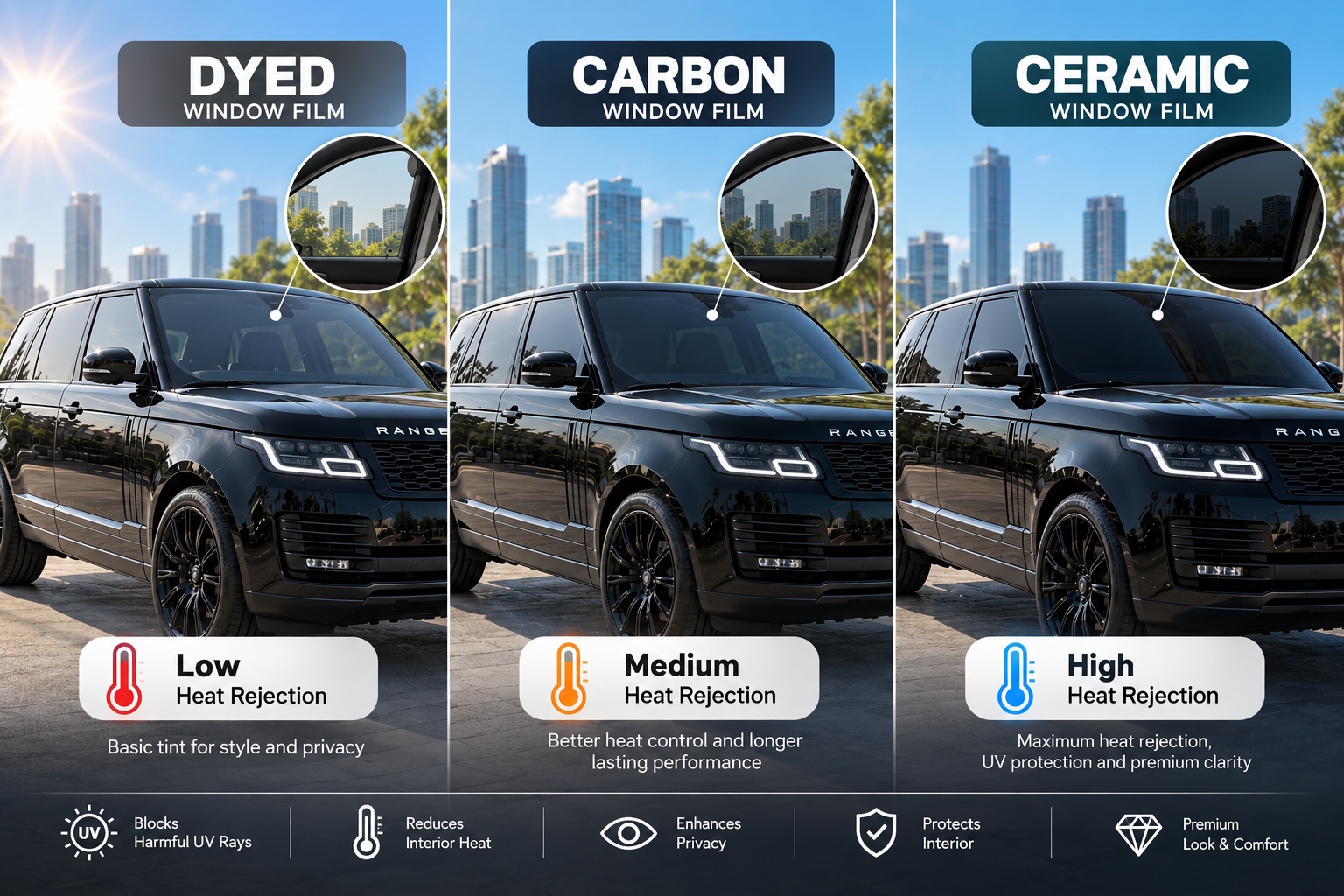
| Film Type | UV Protection | Heat Rejection | Durability | Typical Cost Level |
|---|---|---|---|---|
| Dyed film | Moderate to good | Low | Shorter lifespan | Low |
| Carbon film | Good to very good | Medium | Good | Medium |
| Ceramic film | Very good | High | Longest | High |
Dyed Film
Dyed film uses a layer of colored dye to absorb light. It is the lowest-priced choice and adds privacy and some glare control, but it rejects the least heat and can fade over the years under strong sun.
Carbon Film
Carbon film replaces dye with carbon particles. It keeps its color better, blocks more heat than dyed film, and has a matte finish. It suits drivers who want a middle ground between price and performance.
Ceramic Film
Ceramic film contains non-metallic ceramic particles that are very effective at turning away infrared heat. It does not interfere with phone or GPS signals, and it stays stable in intense sun. It costs more, but it delivers the strongest heat control for Doha’s climate.
Which One Should You Choose?
Match the film to how you drive and what you can spend:
- Budget: dyed film
- Daily commuting: carbon film
- Maximum heat rejection: ceramic film
Ceramic film generally gives the best heat rejection without needing a very dark tint, which makes it easier to stay within the permitted limits.
Is Window Tint Legal in Qatar?
Window tint is regulated in Qatar, and the rules cap how dark the film can be. The limits can vary by window position, for example the windshield, the front side windows, and the rear windows.
Check the current Ministry of Interior traffic regulations or ask your installer to confirm the permitted tint level before booking.
Light, clear, and high-performance films protect your car without being dark. A pale ceramic film can still turn away heat and UV while leaving your windows bright, which helps night visibility. Staying within the permitted level also saves you from removing film later. Rules can change, so treat any number you hear from friends or online as unconfirmed until you verify it with an official source.
What to Look for in a Window Film Installation in Doha
A good window film installation in Doha depends on three things: quality film, a skilled installer, and careful aftercare. A weakness in any one of them can lead to bubbles, peeling, or early fading.
Film Quality and Warranty
Ask which brand of film is being used, and request the data sheet and written warranty terms. Trusted film comes with clear coverage that the installer can explain. Be wary of unbranded rolls that come with no specifications.
Installer Experience and Cleanliness
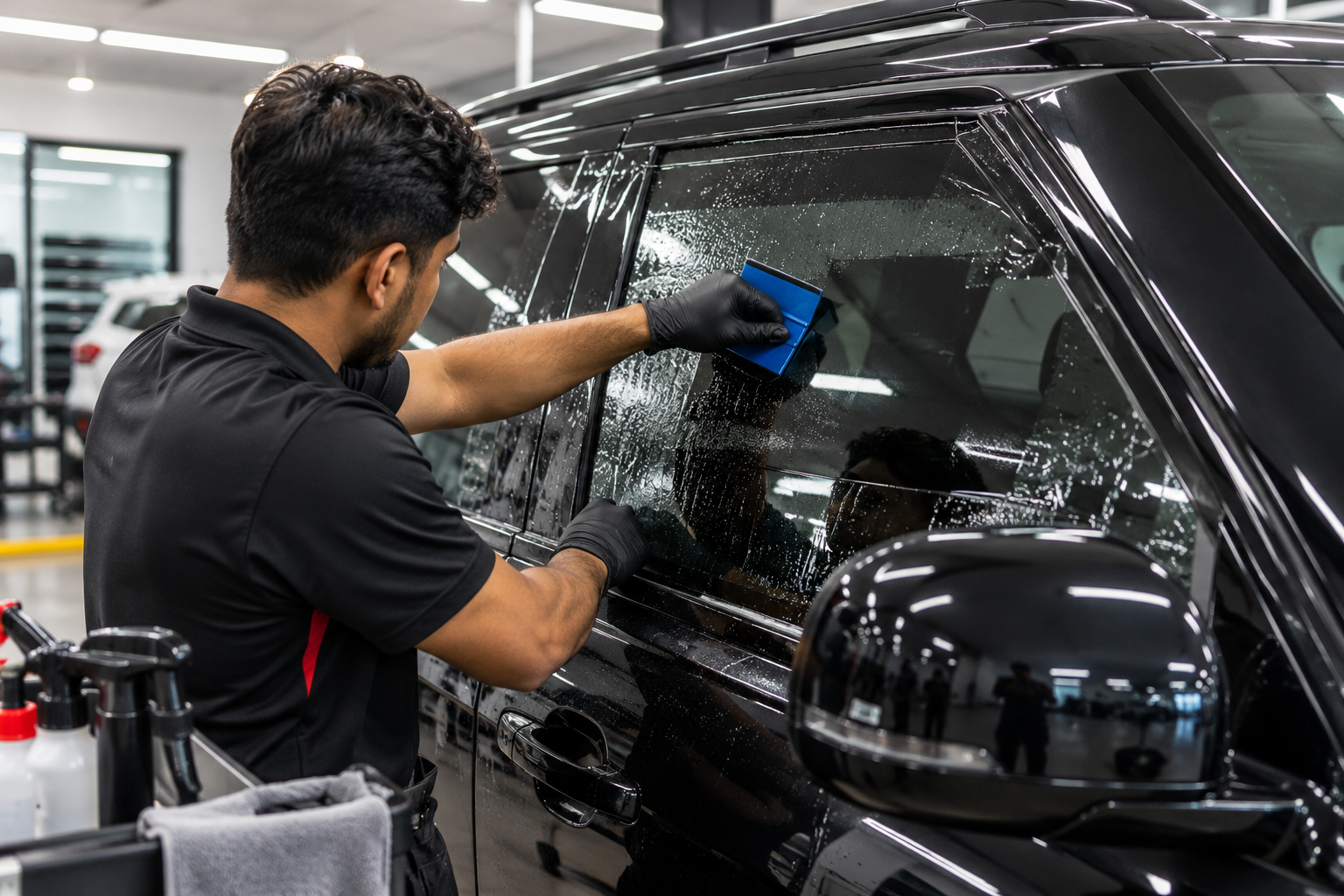
Dust is the enemy of a clean install, because any speck trapped under the film shows up as a visible dot. Whether you choose a specialist studio or a car repair shop in Qatar that also offers tinting, look for a tidy bay and installers who trim and fit film precisely with neat edges. Marakkar Car Care in Madinat Khalifa South, Doha, follows this approach to tinting and detailing.
Aftercare and Curing Time
Fresh film needs a few days to cure. Keep the windows up for the first few days, and do not worry about slight haze, which fades as the film dries. Clean it later with a soft cloth and an ammonia-free product, since ammonia can harm the film. Do not attach stickers or suction mounts to newly filmed glass while it cures.
Conclusion: Protect Your Interior with Window Film in Qatar
Quality window film delivers three clear benefits:
- UV protection: slows fading and cracking
- Heat reduction: lowers cabin temperature and AC strain
- Interior preservation: helps your dashboard, seats, and trim stay fresh for longer
Window film will not make your car immune to sun damage, but it slows that damage considerably. Compare the film types, confirm the permitted tint level, and pick an installer who stands behind the work with a clear warranty. To learn more about car tinting in Qatar, visit our dedicated tinting page.
Frequently Asked Questions About Window Film in Qatar
Common Questions from Qatar Drivers
Does window film really reduce heat inside a car?
Yes, window film lowers the heat inside a car by rejecting part of the infrared energy that would otherwise pass through the glass. Your cabin heats up more slowly and cools down faster. Results vary by film type, and ceramic film usually performs best.
How long does window film last in Qatar’s climate?
Good film can last many years, but the real figure depends on the film type, the quality of the installation, and how you care for it. Dyed film typically ages first in strong sun, while ceramic film is usually the most durable. The written warranty tells you what to expect.
Will window film affect my car’s electronics or GPS signal?
Quality window film generally does not cause noticeable problems with GPS or phone signals, particularly non-metallic ceramic film. Older metallic films could interfere. Ask the installer to confirm that your chosen film is non-metallic before work begins.
Can I install window film on a new car?
Yes, you can install window film on a new car. The glass is clean, and installing early protects the interior from day one. Ask about curing time, and keep the windows up for the first few days.
To discuss film options, contact Marakkar Car Care in Madinat Khalifa South, Doha.
Call 66975522 or 74737481, or visit www.marakkar.qa.