A car’s paint is constantly exposed to Qatar’s strong sunlight, high temperatures, dust, sand, road grime, water spots, and everyday driving conditions. Over time, these factors can reduce paint clarity, create swirl marks, light scratches, oxidation, and a dull appearance.
Professional car polishing can help refine the paint surface and restore its gloss. For longer-term protection, polishing can also be followed by an appropriate paint-protection treatment such as a nano ceramic or quartz coating.
A professional Car Polishing Shop in Qatar can inspect the vehicle, identify the condition of the paint, select the appropriate polishing process, and prepare the surface before applying a suitable protection system.
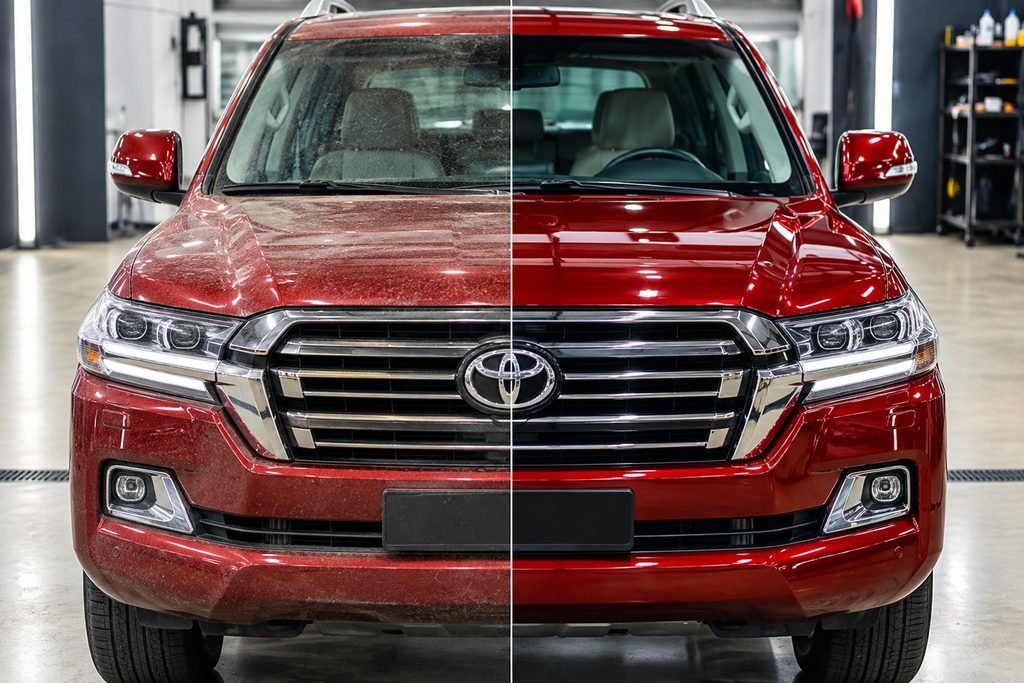
What Causes Car Paint to Lose Its Shine?
Even when a vehicle is washed regularly, its paint can gradually lose its original clarity. The clear coat provides an important protective layer, but repeated environmental exposure and incorrect maintenance can affect its appearance.
Dust and Sand
Dust and sand are common challenges for vehicles in Qatar. When abrasive particles remain on the surface and are removed through dry wiping or improper washing, they can create fine scratches and swirl marks.
Strong Sunlight and Heat
Long-term exposure to strong sunlight can contribute to fading, oxidation, and reduced paint clarity. Vehicles parked outdoors for extended periods may experience greater environmental exposure.
Incorrect Washing Techniques
Using dirty towels, unsuitable cleaning products, rough materials, or aggressive washing techniques can gradually introduce fine scratches and swirl marks.
These imperfections can become particularly noticeable on black and other dark-colored vehicles under direct sunlight or professional inspection lighting.
Road Contamination
Oil residue, insects, bird droppings, brake dust, water deposits, and other contaminants can accumulate on automotive paint. Leaving these contaminants on the surface for long periods can affect the appearance of the finish.
Why Professional Car Polishing Is More Than Just Adding Shine
Car polishing is not simply about making a vehicle look glossy. It is a controlled paint-refinement process designed to improve the appearance of suitable surface imperfections.
Depending on the vehicle’s condition, technicians may select different:
- Polishing compounds
- Machine polishers
- Pads
- Polishing stages
- Machine settings
- Correction techniques
The objective is to achieve the required improvement while preserving as much of the existing clear coat as reasonably possible.
Signs Your Car May Need Professional Polishing
Your vehicle may benefit from professional paint polishing if you notice:
- Swirl marks under direct lighting
- Fine washing scratches
- Dull-looking paint
- Reduced paint clarity
- Light oxidation
- Water spots
- Hazy reflections
- Minor surface imperfections
- A rough or contaminated paint surface
A vehicle can look clean during a normal inspection while still showing significant defects under controlled lighting.
Professional Car Polishing Process
A professional polishing service generally involves several stages. Proper preparation is important because polishing an inadequately prepared surface can affect the final finish.
1. Paint Condition Inspection
The vehicle is inspected to understand the condition of its paint.
Technicians can identify visible defects and determine whether they are suitable for polishing or require another form of paint repair.
2. Exterior Cleaning
Dust, sand, mud, road grime, and loose contaminants are carefully removed.
This stage is particularly important in Qatar because abrasive particles left on the surface can potentially create additional marks during the polishing process.
3. Paint Decontamination
Some contaminants remain attached to the paint even after normal washing. A suitable decontamination process can help create a cleaner surface before polishing.
4. Test Spot
A test spot can be performed on a small section of the vehicle to determine a suitable combination of polishing compound, pad, machine settings, and technique.
This helps the technician choose an appropriate correction approach without unnecessarily polishing the entire vehicle with an overly aggressive process.
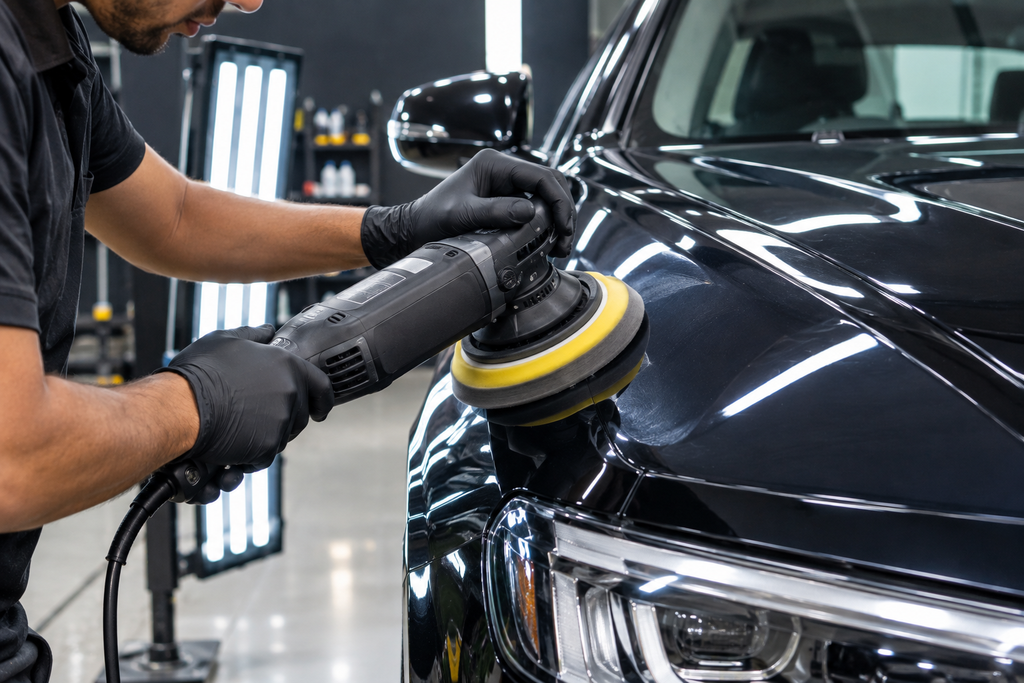
5. Machine Polishing
Once the appropriate process has been selected, the vehicle is polished systematically.
The number of polishing stages depends on:
- Paint condition
- Type of defects
- Paint hardness
- Existing clear coat
- Desired level of correction
- Vehicle owner’s expectations
6. Final Paint Inspection
After polishing, the paint is inspected under suitable lighting from different angles.
This allows the technician to check the consistency of the finish and identify any remaining imperfections.
Zirconite Products After Car Polishing
Once the paint has been properly polished and refined, applying an appropriate protective coating can help form part of a longer-term vehicle-care strategy.
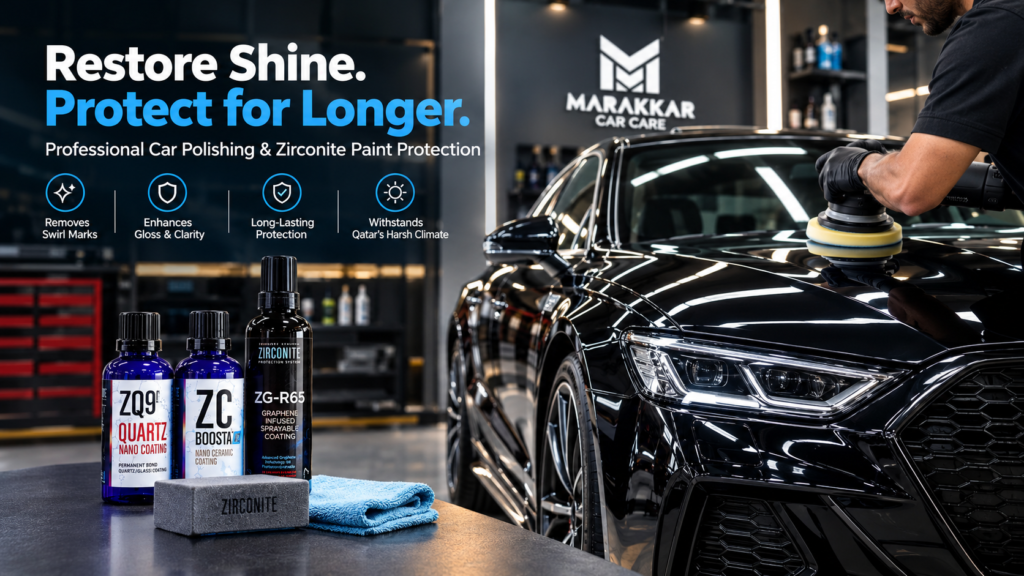
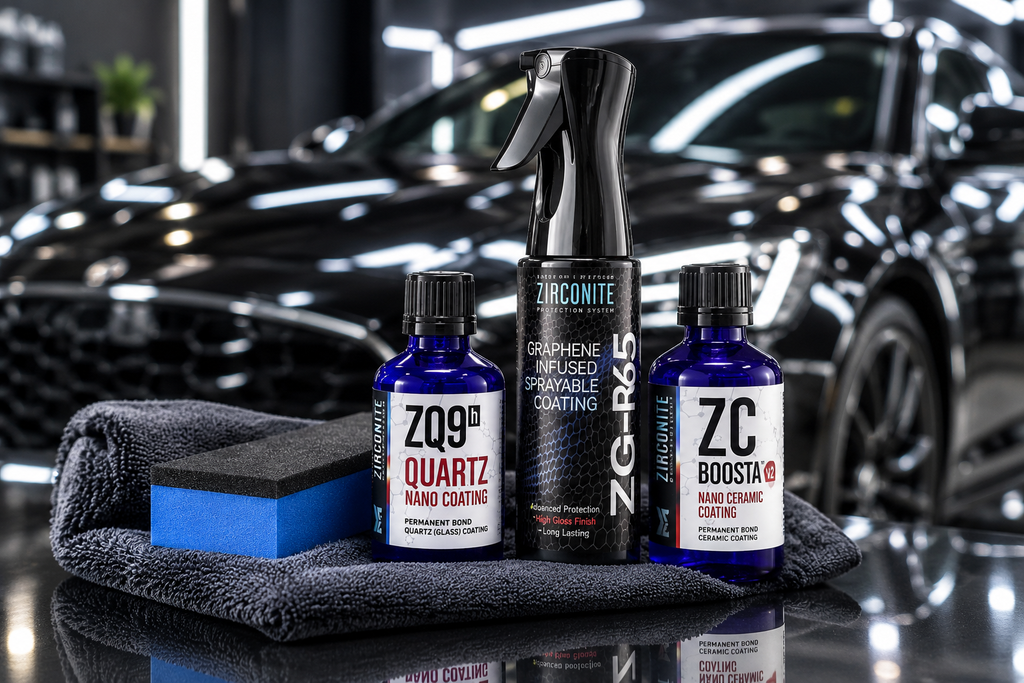
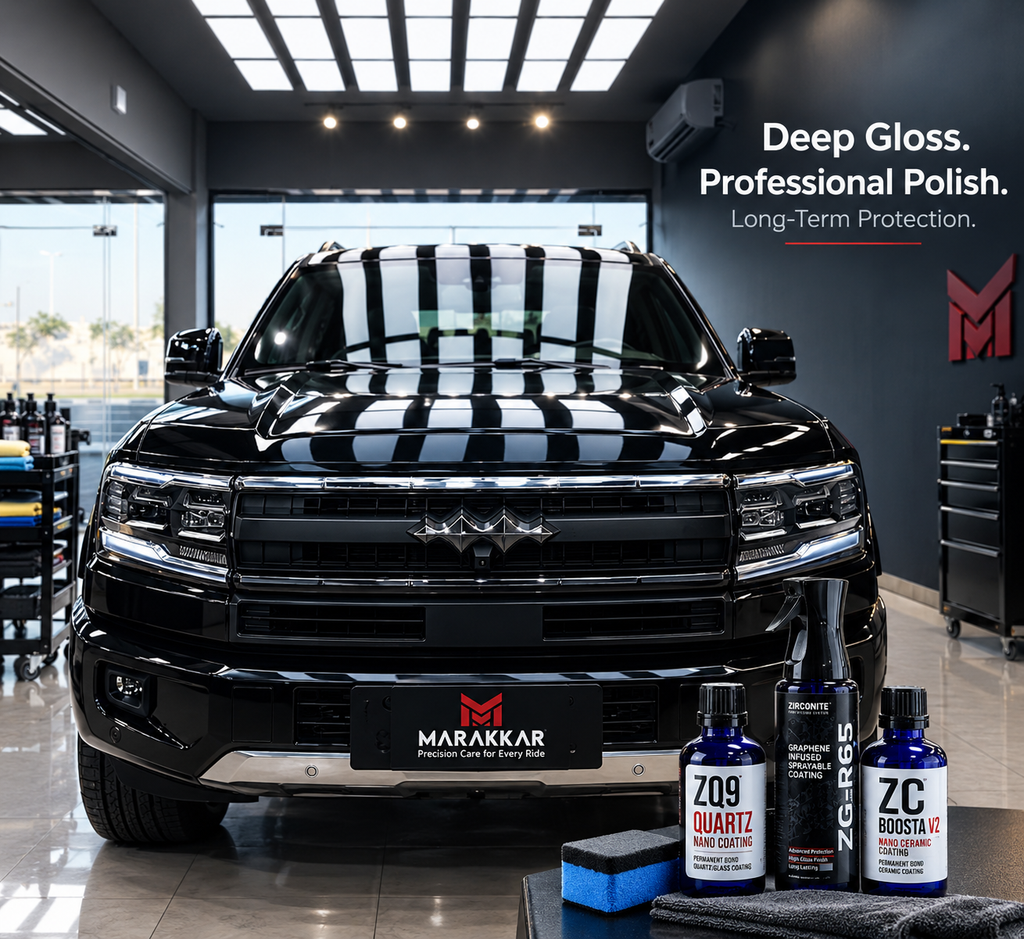
The product images provided for this article feature Zirconite protection products, including ZC Booster V2 Nano Ceramic Coating, ZQ9 Quartz Nano Coating, and ZG-R65 Graphene Infused Sprayable Coating.
The exact product and application method should be selected according to the vehicle, surface condition, preparation process, and intended protection system.
ZC Booster V2 Nano Ceramic Coating
The provided product image features ZC Booster V2 Nano Ceramic Coating from the Zirconite range.
After suitable paint correction and preparation, a nano ceramic coating can be considered as part of the vehicle’s paint-protection process.
For the best visual result, the paint should be thoroughly prepared before any coating application.
ZQ9 Quartz Nano Coating
The provided Zirconite product image also features ZQ9 Quartz Nano Coating.
Quartz-based coating systems can be incorporated into a professional paint-protection workflow after the paint has been properly cleaned, decontaminated, and polished.
The preparation stage is particularly important because the coating is applied to the prepared surface rather than being used as a substitute for paint correction.
ZG-R65 Graphene Infused Sprayable Coating
The supplied product image also features ZG-R65 Graphene Infused Sprayable Coating.
A sprayable coating can be presented as another product option within a professional vehicle-protection workflow, depending on the surface and application requirements.
Why Paint Preparation Matters Before Coating
A coating should not be viewed as a replacement for polishing.
If the paint contains swirl marks, oxidation, water spots, or other imperfections, these should be assessed and, where appropriate, corrected before applying the protective product.
The general workflow can therefore be:
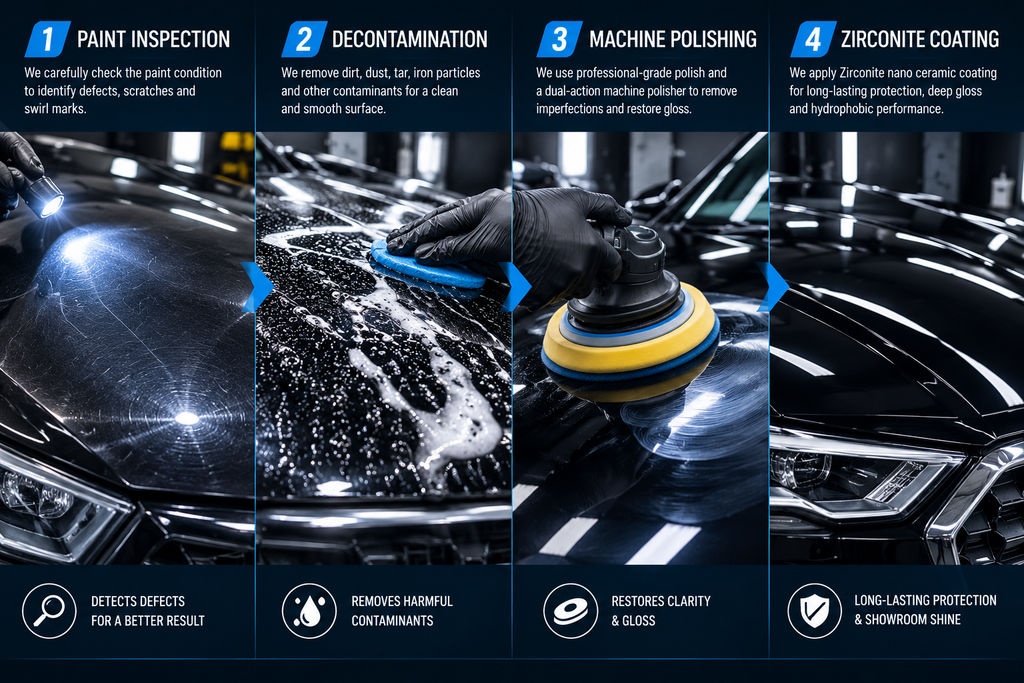
Inspection → Washing → Decontamination → Paint Correction/Polishing → Final Inspection → Coating Application → Aftercare
This approach helps ensure that the protective treatment is applied to a properly prepared surface.
Can Car Polishing Remove Scratches?
Polishing can address certain types of surface defects, but it cannot safely remove every scratch.
Light scratches and swirl marks that are primarily within the clear coat may be reduced through appropriate polishing.
Deeper scratches that extend through the clear coat and into the color layer may require professional paint repair.
Repeatedly polishing aggressively in an attempt to remove a deep scratch can result in unnecessary clear-coat removal.
A professional inspection is therefore important before deciding how much correction is appropriate.
Why Car Polishing Should Be Customized
Every vehicle has a different paint condition.
A relatively new vehicle with minor washing marks may require only light paint enhancement, while an older vehicle with oxidation, water spots, deeper swirl marks, and years of improper washing may require a more involved correction process.
Other factors include:
- Vehicle age
- Paint color
- Previous paintwork
- Clear-coat condition
- Existing protection
- Washing habits
- Environmental exposure
- Desired finish
Dark-colored vehicles often reveal fine imperfections more clearly than lighter colors.
Car Polishing vs. Car Detailing
Car polishing and detailing are related but different services.
Car polishing primarily focuses on refining painted exterior surfaces and improving their appearance.
Car detailing is a broader vehicle-care process that can include:
- Exterior cleaning
- Decontamination
- Paint correction
- Interior cleaning
- Wheel care
- Glass cleaning
- Trim treatment
- Paint protection
Polishing can therefore be one component of a complete detailing service.
Car Polishing vs. Waxing vs. Ceramic Coating
These services have different purposes.
| Service | Main Purpose |
| Car Polishing | Refines the paint and addresses suitable surface imperfections |
| Waxing | Enhances the finish and provides a temporary protective layer |
| Ceramic/Nano Coating | Provides a protective coating after suitable paint preparation |
| PPF | Provides a physical film layer for selected areas of the vehicle |
Polishing should generally come before a coating when paint correction is required.
Should You Polish a New Car?
A new car does not automatically require aggressive polishing.
New vehicles can sometimes have minor defects resulting from transportation, dealership preparation, washing, or handling.
A professional inspection can determine whether the vehicle needs:
- Light polishing
- Paint enhancement
- Decontamination
- Paint correction
- Protective coating
- Or simply routine maintenance
The least aggressive process necessary should generally be considered.
Should You Apply Zirconite Coating After Polishing?
When the goal is to improve the appearance of the paint and then protect the prepared finish, a suitable Zirconite coating can be considered after polishing.
The important step is surface preparation.
A typical workflow may involve:
- Thorough exterior cleaning
- Paint decontamination
- Paint inspection
- Appropriate polishing
- Removal of polishing residue
- Final surface inspection
- Application of the selected Zirconite product
- Appropriate curing and aftercare according to the product/application requirements
The specific Zirconite product should be selected based on the intended application and professional application requirements.
What About Paint Protection Film?
Paint Protection Film, commonly known as PPF, serves a different purpose from polishing and coating.
Polishing improves the visual condition of the paint, while PPF provides a physical film layer over selected areas.
For vehicles exposed to road debris and stone chips, PPF can be considered for additional physical protection.
Polishing, coating, and PPF can therefore serve different roles within a complete vehicle paint-care strategy.
How to Maintain Your Car After Polishing and Coating
Professional polishing and coating are only part of maintaining a vehicle’s appearance.
Wash the Vehicle Correctly
Use suitable automotive cleaning products and clean microfiber materials.
Avoid Dry-Wiping Dust
Dry-wiping a dusty vehicle can drag abrasive particles across the paint and create fine marks.
Remove Contaminants Promptly
Bird droppings, insects, and other contaminants should be removed carefully instead of being left on the surface for extended periods.
Park in a Covered Area When Possible
Covered parking can reduce direct exposure to sunlight and environmental contaminants.
Follow Product Aftercare Instructions
If your vehicle has received a Zirconite coating or another protection system, follow the appropriate maintenance and aftercare instructions recommended for that product.
How to Choose a Car Polishing Shop in Qatar
When selecting a Car Polishing Shop in Qatar, it is useful to look beyond the price of the service.
Consider whether the shop:
- Inspects the paint before polishing
- Customizes the polishing process
- Uses suitable polishing equipment
- Uses appropriate products
- Performs a test spot when required
- Explains realistic correction results
- Provides proper surface preparation
- Offers suitable paint-protection options
- Provides aftercare guidance
A professional approach should focus on improving the vehicle’s appearance while avoiding unnecessary correction.
How Often Should You Polish Your Car in Qatar?
There is no universal polishing schedule for every vehicle.
The appropriate frequency depends on:
- Vehicle usage
- Paint condition
- Washing techniques
- Outdoor exposure
- Existing protection
- Previous polishing
- Environmental conditions
Polishing should generally be considered when the paint requires correction or enhancement rather than being performed unnecessarily frequently.
Regular washing and proper maintenance can help reduce the need for repeated paint correction.
Conclusion
Qatar’s heat, sunlight, dust, sand, and everyday road exposure can gradually affect the appearance of automotive paint. Regular washing helps maintain cleanliness, but it cannot always correct swirl marks, light scratches, oxidation, water spots, and reduced paint clarity.
Professional polishing provides a more targeted approach to refining the paint and improving its visual appearance.
Once the paint has been properly prepared, a suitable protection system can be considered. The Zirconite ZC Booster V2 Nano Ceramic Coating, ZQ9 Quartz Nano Coating, and ZG-R65 Graphene Infused Sprayable Coating featured in the supplied product images can be incorporated into a professional paint-protection workflow according to the appropriate application requirements.
For vehicle owners looking for a Car Polishing Shop in Qatar, choosing a service that assesses the paint condition, uses an appropriate polishing process, and provides suitable protection and aftercare can help maintain a cleaner, deeper, and more reflective finish.
Frequently Asked Questions
What is car polishing?
Car polishing is a paint-refinement process designed to improve the appearance of painted vehicle surfaces by addressing suitable imperfections such as swirl marks, light scratches, oxidation, and dullness.
Can car polishing remove scratches?
Polishing can reduce certain light scratches and swirl marks. Deeper scratches may require professional paint repair.
Can I apply Zirconite coating after polishing?
Yes, a suitable Zirconite coating can be considered after the paint has been properly polished, cleaned, and prepared for the coating application.
What Zirconite products can be used for paint protection?
The products featured in the supplied images include ZC Booster V2 Nano Ceramic Coating, ZQ9 Quartz Nano Coating, and ZG-R65 Graphene Infused Sprayable Coating. The appropriate product depends on the intended application and preparation requirements.
How often should I polish my car in Qatar?
The ideal frequency depends on the vehicle’s paint condition, washing habits, environmental exposure, and existing protection. A professional assessment is more useful than following a fixed schedule.
Is professional car polishing safe?
When an appropriate polishing method is selected and performed correctly, professional polishing can improve the appearance of the paint while minimizing unnecessary clear-coat removal.
Should I polish my car before ceramic coating?
When correction is required, polishing can help prepare the paint before a coating is applied. The surface should be properly cleaned and prepared before coating.
Why is car polishing important in Qatar?
Using dirty towels, unsuitable cleaning products, rough materials, or aggressive washing techniques can gradually introduce fine scratches and swirl marks.
These imperfections can become particularly noticeable on black and other dark-colored vehicles under direct sunlight or professional inspection lighting.