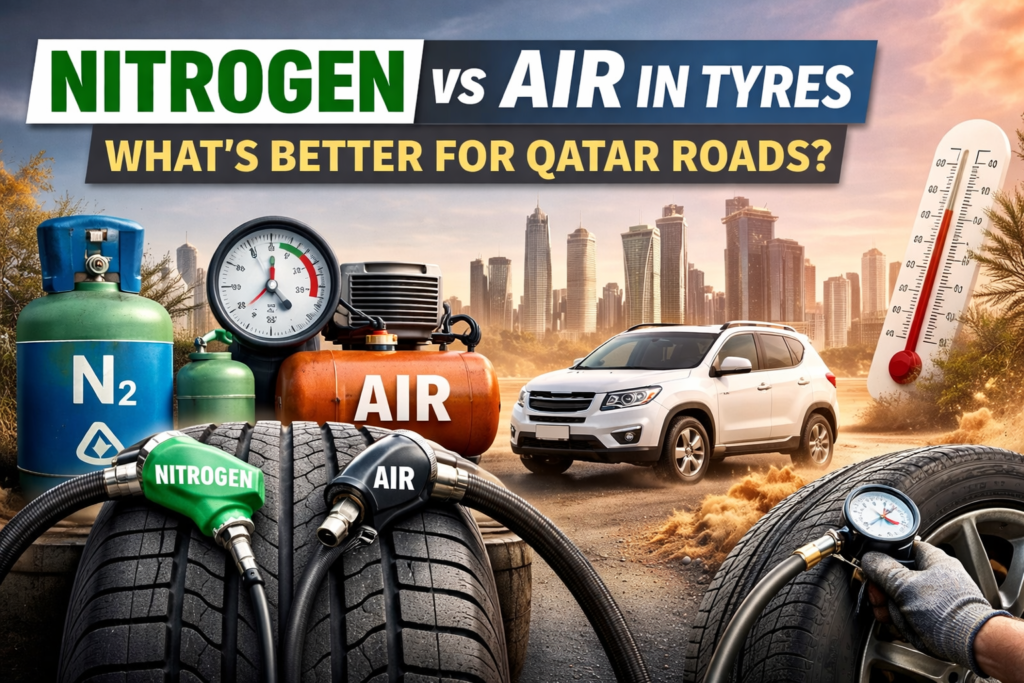
Driving in Qatar means dealing with extreme temperatures, high-speed highways, and demanding road conditions. One common question many drivers ask is:
Should I fill my tyres with nitrogen or regular air?
With temperatures often exceeding 45°C during summer in Doha, tyre pressure stability becomes critical for safety and performance. If you are considering upgrading your tyre maintenance routine at a professional Tyre Shop in Qatar, this complete guide will help you understand the difference between nitrogen and normal air in tyres.
You can also visit our location directly via Google Maps.
Understanding What’s Inside Your Tyres
Before comparing nitrogen and air, it’s important to understand what “normal air” actually contains.
Regular compressed air typically contains:
- 78% nitrogen
- 21% oxygen
- Small amounts of moisture and other gases
Nitrogen tyre filling uses nearly pure nitrogen (around 95–99%) and removes most oxygen and moisture.
The key question is: Does this difference really matter on Qatar roads?
Why Tyre Pressure Matters in Qatar
Qatar’s hot climate significantly impacts tyre pressure.
Heat causes:
- Air expansion inside tyres
- Increased internal pressure
- Higher risk of blowouts
- Uneven tread wear
Regular pressure checks at a trusted Car Repair Shop in Qatar are essential to prevent tyre damage.
What Is Nitrogen Tyre Filling?
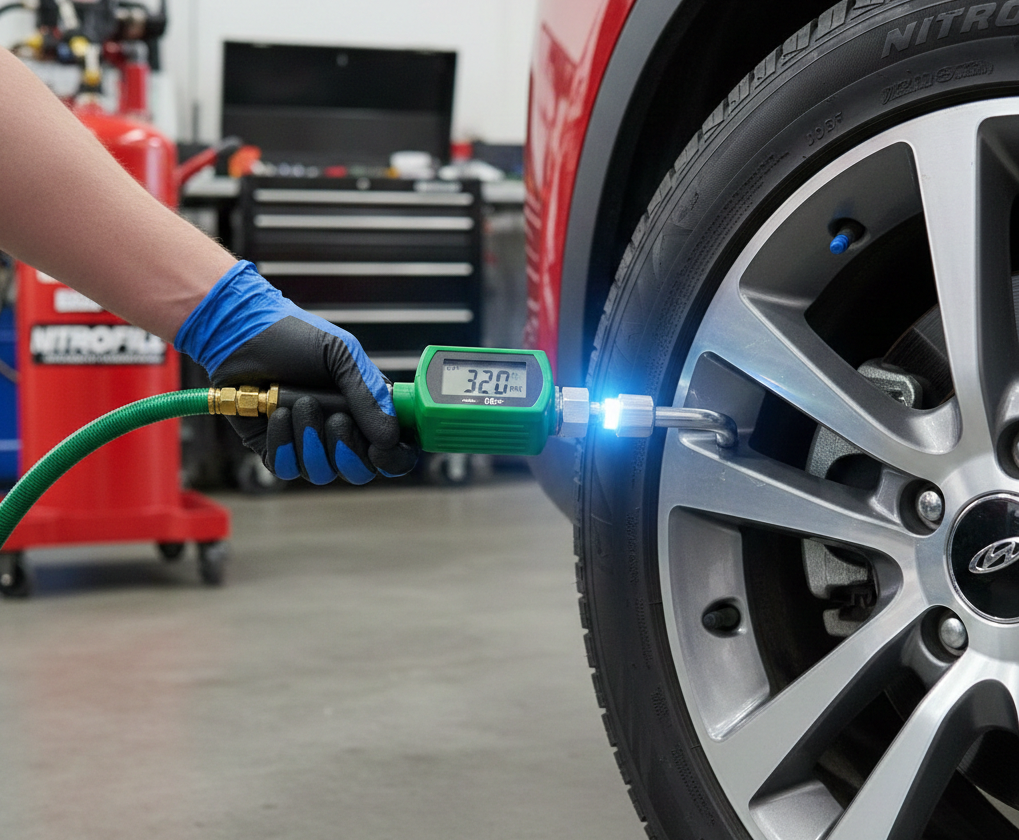
Nitrogen tyre filling replaces regular compressed air with purified nitrogen gas.
Many professional garages and premium Best Tire Shop in Qatar offer nitrogen filling as an advanced tyre care option.
Benefits of Nitrogen in Tyres
1. More Stable Tyre Pressure
Nitrogen molecules are larger than oxygen molecules, which means they escape more slowly through rubber.
This results in:
- More consistent tyre pressure
- Less frequent refilling
- Improved fuel efficiency
In Qatar’s heat, stable pressure reduces the risk of sudden blowouts.
2. Reduced Moisture Inside Tyres
Compressed air contains moisture. When temperatures rise, moisture expands unevenly and causes pressure fluctuations.
Nitrogen is dry, meaning:
- No internal moisture
- More stable expansion
- Reduced internal corrosion
This is particularly useful in Qatar’s extreme summer conditions.
3. Improved Tyre Lifespan
Stable pressure and reduced oxidation can slightly extend tyre life.
However, the difference is noticeable mainly when combined with:
- Regular Wheel Alignment Service in Qatar
- Proper tyre rotation
- Balanced driving habits
Nitrogen alone does not eliminate wear caused by misalignment or aggressive driving.
4. Better Fuel Efficiency
Correct tyre pressure improves rolling resistance, which can enhance fuel economy.
Maintaining optimal pressure at a professional Tyre Shop in Qatar ensures maximum savings.
Advantages of Regular Air in Tyres
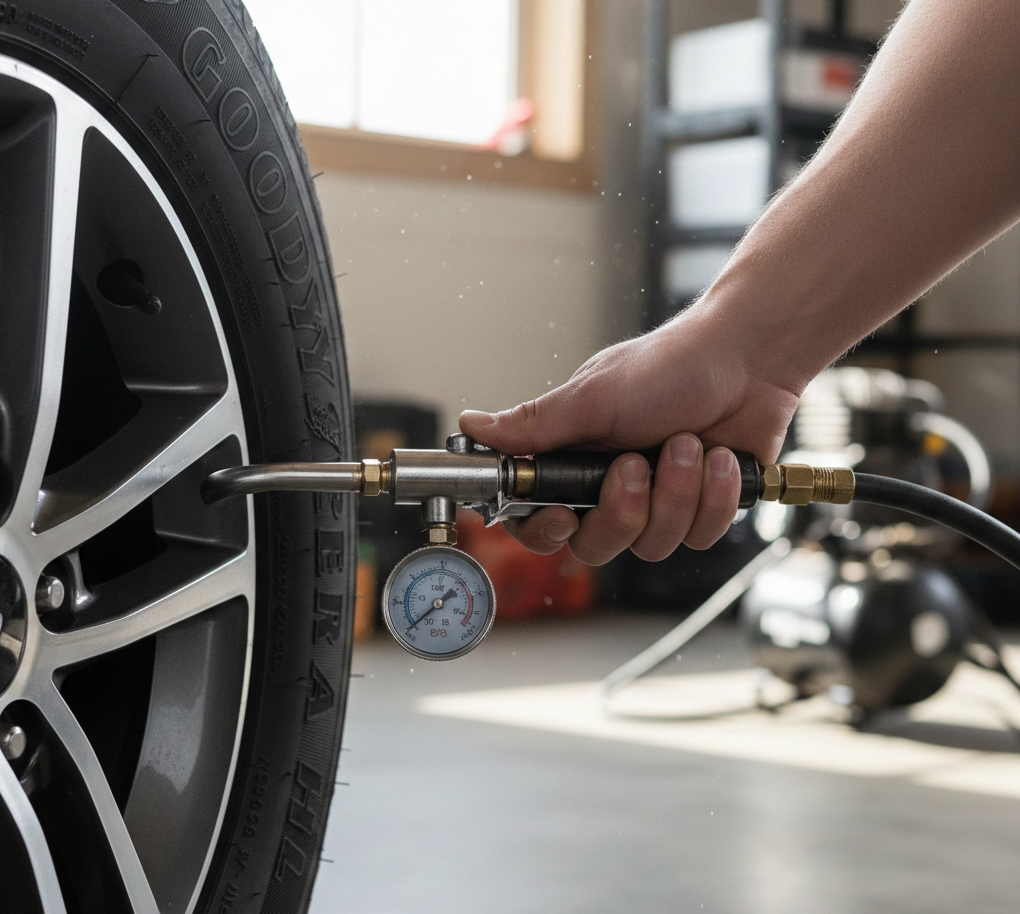
Despite the benefits of nitrogen, regular air still works perfectly well for most drivers.
1. Easily Available Everywhere
Air compressors are available at every fuel station.
If pressure drops unexpectedly, you can refill immediately without searching for a nitrogen facility.
2. Lower Cost
Air filling is usually free or very inexpensive.
Nitrogen filling may involve additional charges depending on the service provider.
3. Minimal Performance Difference for Daily Drivers
For average city driving in Doha and surrounding areas, the performance difference between nitrogen and air is often small — provided tyre pressure is maintained correctly.
Routine checks at a reliable Car Repair Shop in Qatar are more important than the type of gas used.
Nitrogen vs Air: Side-by-Side Comparison
| Feature | Nitrogen | Regular Air |
| Pressure Stability | High | Moderate |
| Moisture Content | Very Low | Contains Moisture |
| Cost | Higher | Low/Free |
| Availability | Limited Locations | Widely Available |
| Blowout Risk | Slightly Lower | Normal |
| Maintenance Frequency | Less Frequent | More Frequent Checks |
Which Is Better for Qatar Roads?
The answer depends on your driving habits.
Nitrogen Is Ideal If You:
- Frequently drive long highway distances
- Own a luxury or performance vehicle
- Want minimal pressure fluctuations
- Prefer premium tyre care
Visit a professional Best Tire Shop in Qatar for nitrogen filling and expert inspection.
Regular Air Is Sufficient If You:
- Drive mostly within the city
- Check tyre pressure regularly
- Maintain proper Wheel Alignment Service in Qatar
- Rotate tyres on schedule
For most daily drivers, consistent maintenance matters more than the type of gas.
Common Misconceptions About Nitrogen Tyres
Myth 1: Nitrogen Prevents All Blowouts
False. Blowouts are primarily caused by:
- Underinflation
- Overloading
- Old tyres
- Extreme heat
Even nitrogen-filled tyres require regular inspection at a professional Tyre Shop in Qatar.
Myth 2: Nitrogen Eliminates Tyre Wear
Incorrect. Tyre wear depends on:
- Wheel alignment
- Driving style
- Road conditions
- Suspension health
Routine servicing at a trusted Car Repair Shop in Qatar is essential.
Myth 3: You Cannot Mix Air with Nitrogen
In reality, topping up nitrogen tyres with air is safe if necessary. However, purity levels will reduce slightly.
How Often Should Tyre Pressure Be Checked in Qatar?
In Qatar’s climate, check tyre pressure:
- Once per week during summer
- Before long highway drives
- After temperature changes
You can visit a professional Tyre Shop in Qatar for accurate digital pressure checks.
When Should You Consider Switching to Nitrogen?
Consider nitrogen if:
- You notice frequent pressure drops
- You drive high-performance vehicles
- You want enhanced pressure stability
- You travel long distances regularly
Consult experts at a reliable Best Tire Shop in Qatar to determine the best solution for your vehicle.
The Most Important Factor: Proper Tyre Maintenance
Regardless of whether you choose nitrogen or air, these practices are critical:
✔ Regular tyre pressure checks
✔ Timely tyre rotation
✔ Professional wheel alignment
✔ Wheel balancing
✔ Replacing old tyres on time
Professional inspection at a trusted Car Repair Shop in Qatar ensures safety and long-term performance.
Frequently Asked Questions (FAQs)
1. Is nitrogen better than air for tyres in Qatar?
Nitrogen offers better pressure stability in extreme heat, but regular air works well if maintained properly. Maintenance is more important than gas type.
2. Does nitrogen improve fuel efficiency?
Yes, slightly. Stable pressure reduces rolling resistance, which can improve fuel economy over time.
3. How long does nitrogen stay in tyres?
Nitrogen escapes more slowly than regular air, meaning fewer pressure adjustments are needed. However, routine checks are still required.
4. Is nitrogen worth the extra cost?
For luxury vehicles and long-distance highway drivers in Qatar, nitrogen can be beneficial. For daily city driving, regular air is usually sufficient.
5. Can I switch back to air after using nitrogen?
Yes. There is no damage in switching back to regular air if needed.
Final Verdict: Nitrogen or Air for Qatar Roads?
In Qatar’s extreme heat and high-speed conditions, nitrogen provides slightly better pressure stability and moisture control. However, the real key to tyre longevity and safety is consistent maintenance.
Whether you choose nitrogen or regular air, ensure:
- Correct tyre pressure
- Regular alignment
- Professional inspection
- Timely tyre replacement
For expert guidance, visit a trusted Tyre Shop in Qatar or consult professionals at a reliable Car Repair Shop in Qatar.
You can also find us directly on Google Maps.